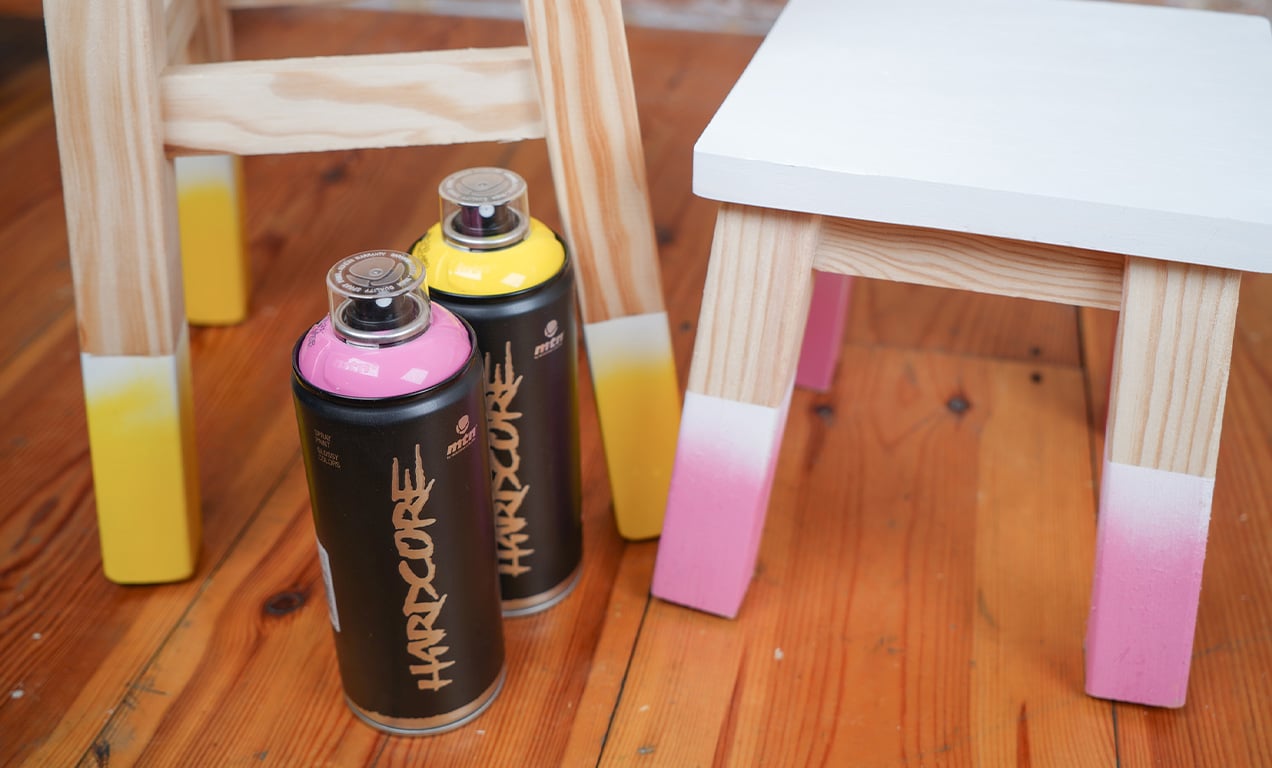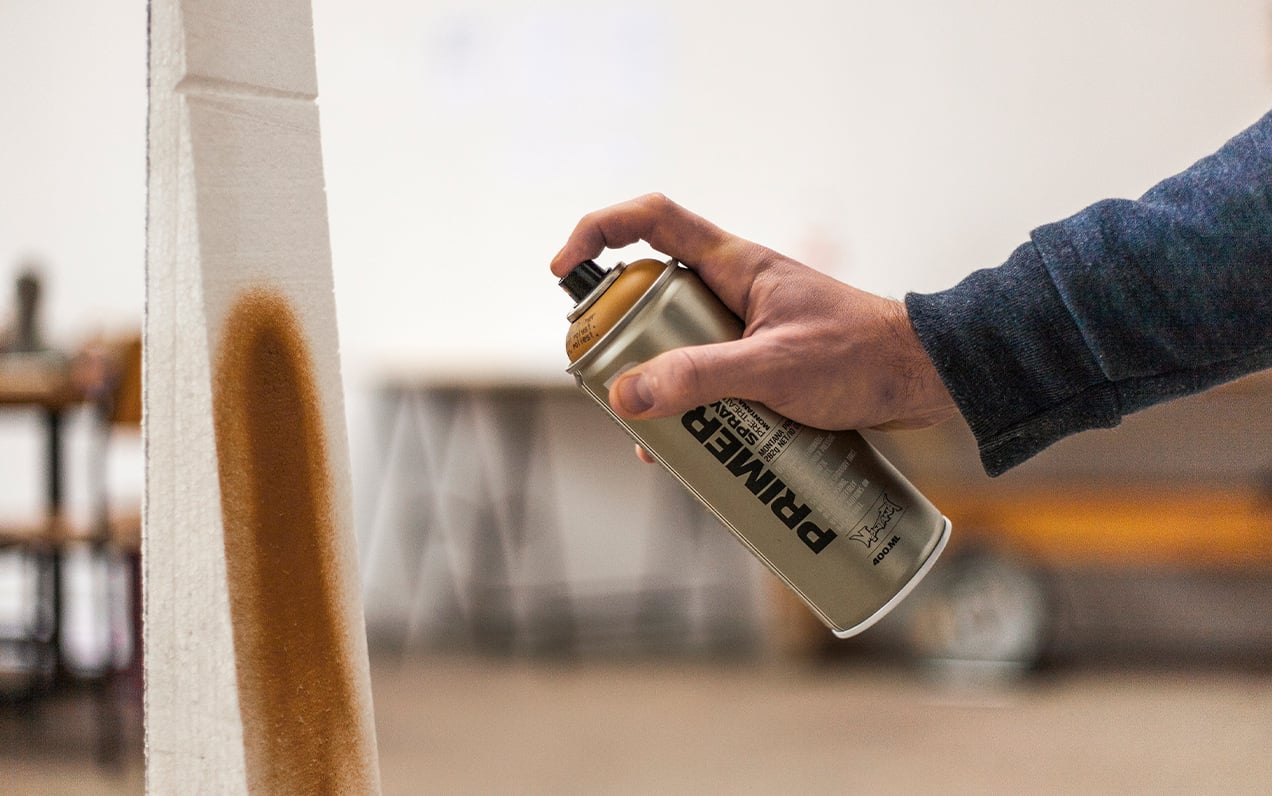
There is probably no better technique for personalising, refurbishing, and decorating than spray painting. This method gives you a fast application of paint, along with the unique finish that would be impossible to achieve using other types of painting equipment. However, if you want your project to look great and be perfect, then there are many important things you need to know and follow. Otherwise, you will end up making several common mistakes that are usually easy to avoid.
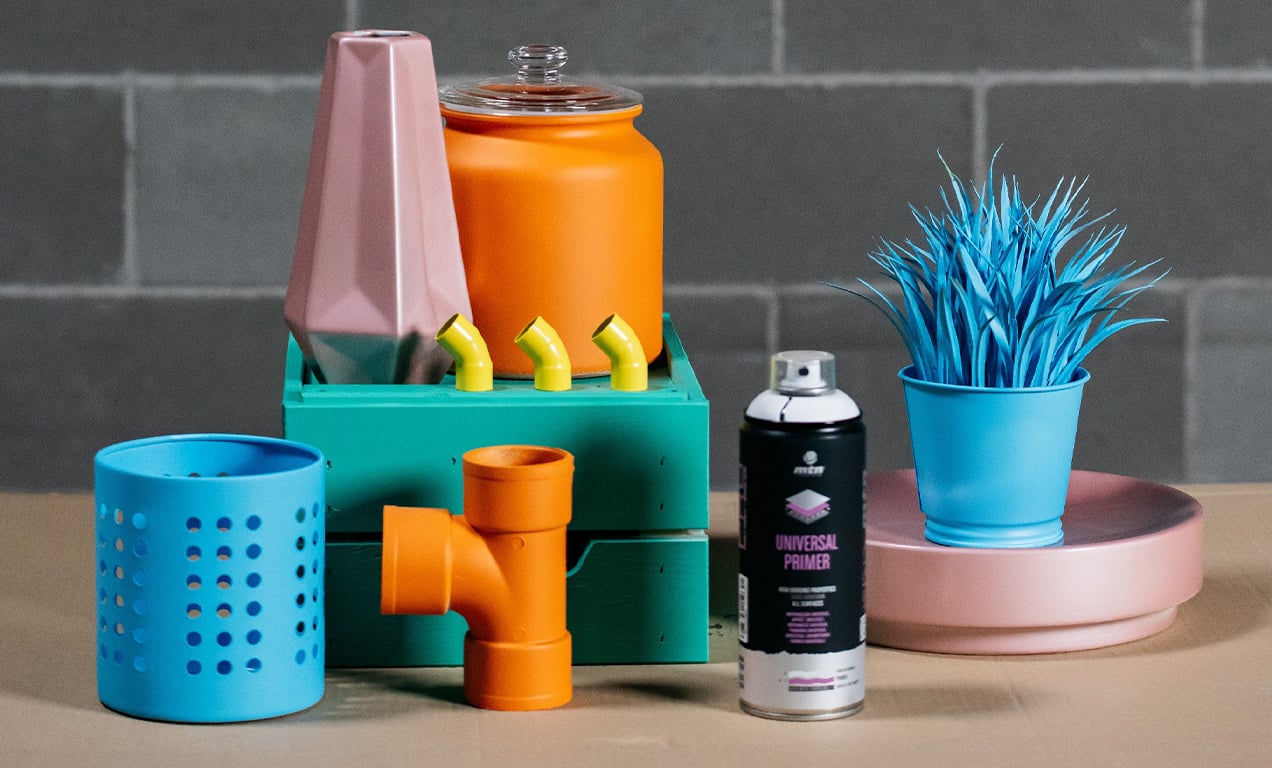
Here, we will review some of those mistakes, as well as show you how to overcome them. It doesn’t matter what level of expertise you have; this information will help you improve your skills and techniques.
Spraying Too Close
A way to quickly spoil any surface finishing job is to hold the can very close to the surface. While this may seem to increase productivity or give better results, you’re only placing too much paint in a single spot, making it too heavy and pooling on the surface, thus forming runs and streaks.
Spray paint dripping is usually a result of keeping the can too close to the surface. Spray paint needs a little bit of time to disperse properly and adhere to the surface; therefore, it needs some room.
The best solution would be to spray from a distance of approximately 20-30 cm. Also, try not to hover above a particular spot for too long and to move your hand in one direction, making a continuous motion. Spraying the paint either horizontally or vertically in a slightly overlapping manner should help you achieve the perfect finish.
Make sure not to start the spray right at the surface, but rather to begin spraying before reaching the surface and stop when you’ve left the spot.
Over-Applying Paint
Another error is applying paint on a surface in one single thick coat, especially when one is painting with dark base colours or is aiming to apply a vivid colour. Although it may be convenient and easy to do it in one attempt, this usually leads to several mistakes, such as sagging, bubbling, unevenness, and lengthy curing periods.
Indeed, this is a particularly annoying spray painting problem since, although the result looks perfect at first, it quickly shows signs of defects during the curing process. Applying an excessive layer causes the solvent to remain trapped within the paint, trying to escape from under it, leading to defects.
Instead, it is recommended to apply paint in several thin layers rather than one single thick layer. This method will make your job much easier while offering better results. The main advantage of this technique is that you will end up with a better-controlled and more precise result: a more homogeneous, smooth, and durable paint finish.
Skipping Surface Prep
Surface preparation is frequently ignored; yet, it is the single most crucial procedure. No matter how good your painting methods are, paint will not stick adequately to the surface if it is dusty, greasy, damp, or covered with old peeling paint.
Without proper preparation, you run the risk of getting paint that flakes or cracks and gives you an uneven or poor-quality result. Sometimes it is enough that the surface was not appropriately cleaned, and no high-quality paint will give you the desired results.
The first thing to do is to carefully clean the surface with a proper cleaning agent. Next, gently sand it to achieve a slightly rough surface, which will help you in creating a more durable bond. For some surfaces, especially when dealing with plastic or metal products, as well as already painted surfaces, it is a good idea to use a primer before applying paint.
Preparation is essential!
Ignoring Dry Time
The drying time of your painting job is an essential aspect which may be overlooked at times. It can be tempting to think that once you are certain that the surface you are working on is already dry to the touch, you should apply another layer of paint. However, more often than not, this is a big mistake since the layers under the top one are only in the process of curing. If you add another coating, you are likely to end up with wrinkled, smeared paint, which never cures at all.
External conditions are also crucial in determining how fast your paint can dry. The ambient temperature, level of humidity, and amount of air flow will influence drying time. This is yet another variable that cannot be overlooked.
When working with paints, stick to the drying time specified on the tin and account for changes due to external circumstances.
Fixing Errors Too Soon
Errors are bound to occur as part of the painting process, such as drips, inconsistent coating, or unwanted foreign matter settling on the paint. However, the problem arises when attempting to resolve these errors immediately. The wet paint is highly susceptible, and interfering with it at an early stage tends to make the matter worse or lead to additional mistakes.
Although it may be instinctive to try to solve the problem immediately, waiting for the paint to dry completely would be more effective. It provides a stable base to work on without causing any more damage.
For those who intend to rectify their spray paint mistakes, it is recommended that you first remove the rough patches using sandpaper to ensure an even and smooth surface. Next, repaint the area with thin coats of paint while blending in gradually with the existing finish.
Final Thoughts
The main key points that should be kept in mind when applying spray paint are consistency, proper control, and patience. It may be tempting to concentrate on the final results and ignore all intermediate stages; however, in reality, the quality of the job depends greatly on the quality of execution. Improper handling of any particular stage almost always results in a poor finish and requires stripping it all off and starting anew.
Using a more balanced approach not only allows for producing better immediate effects but also contributes to the formation of healthy practices. As one concentrates more on the specifics of distance, layering, and drying, one learns to apply the paint in the proper way and understand its behaviour on certain surfaces and in certain environmental conditions. This leads to the development of more advanced techniques and skills.
What is important to remember here is that there is always a way to correct mistakes and fix problems using special techniques. Spray painting is a skill and, as with any other skill, it improves with practice. Each task one completes brings a new experience and helps acquire new skills. In such circumstances, even failure may be considered an opportunity to grow.
This being said, there are always ways to ensure a professional finish by taking into consideration all possible difficulties in advance and using appropriate techniques.